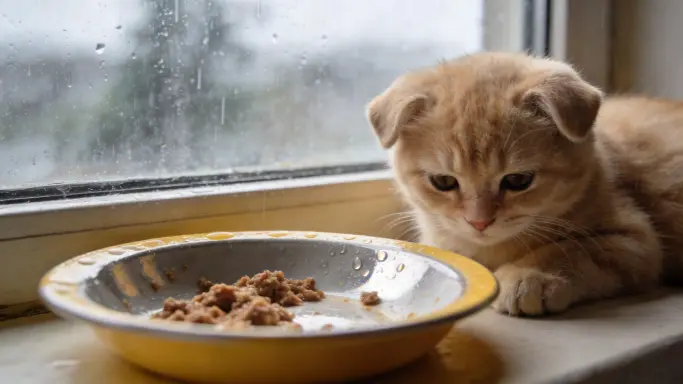

Many people mistakenly believe that cats are cold and independent and do not experience emotional fluctuations, but this is not the case. Like humans, cats can also experience depressive emotions. However, they cannot express themselves with words, and all their discomfort is hidden in changes in behavior. As cat owners, we are not only their providers of food and clothing but also their emotional guardians—understanding cats’ “emotional codes” and detecting abnormalities in a timely manner can help them get out of the slump and return to a lively and agile state. Cat depression is not irreversible; with the right methods and sufficient patience, most cats can regain their happiness.
Core Causes of Cat Depression
Cats’ emotions are sensitive and fragile. Any factor that breaks the balance of their lives can become a trigger for depression. These triggers may seem trivial, but they can directly affect cats’ mental state, mainly divided into the following categories:
- Sudden Environmental Changes: Moving, home renovation, adjustment of furniture layout, or even the owner changing their living environment can make cats lose a sense of security and then fall into depression. Cats have a strong dependence on familiar smells and spaces, and unfamiliar environments can keep them in a state of tension for a long time.
- Lack of Companionship: Sudden changes in the owner’s schedule, long business trips, frequent overtime, the addition of new family members (humans or pets), or the loss of close companions (cats, dogs, or owners) can all make cats feel lonely and then become emotionally depressed.
- Health Hazards: Cats suffering from chronic pain, skin diseases, oral diseases, or decreased physical function due to aging will show depressive symptoms due to discomfort, which is easily mistaken by owners for “laziness.”
- Insufficient Stimulation: Long-term lack of play and interaction, and an overly monotonous life—especially for indoor cats—can easily lead to “environmental depression” out of boredom, followed by a series of abnormal behaviors.
Typical Signs of Cat Depression (Easily Overlooked Details)
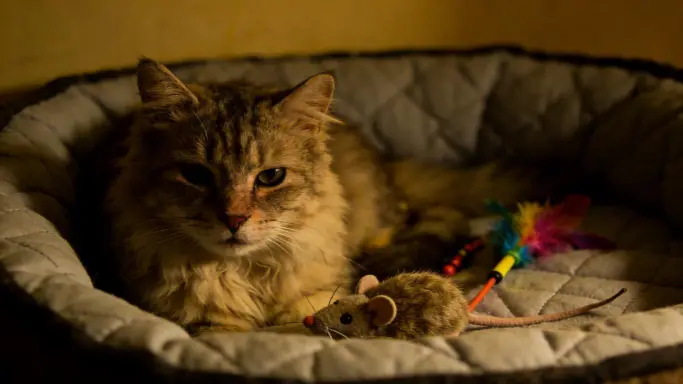
Cats are good at hiding their emotions, but their depressive signs are not without traces. As long as you observe carefully, you can find their “distress signals.” If even 2-3 of the following signs appear, it is necessary to pay attention:
- Abnormal Appetite: Either refusing to eat completely, or eating a significantly reduced amount, even being indifferent to their favorite snacks. In the long run, this will lead to weight loss.
- Sleep Disturbance: Sleeping far more than the normal range (adult cats normally sleep 12-16 hours a day, and may sleep more than 18 hours when depressed), with poor sleep quality, being easily awakened, and listless even after waking up.
- Changes in Grooming Habits: Either stopping grooming completely, leading to messy, matted fur and severe hair loss; or over-grooming, even licking until the skin is damaged. Both are signs of emotional anxiety and depression.
- Social Withdrawal: No longer taking the initiative to approach the owner, refusing to be petted or hugged, and even avoiding the owner’s gaze; deliberately avoiding other pets and no longer interacting and playing with them.
- Abnormal Elimination: Suddenly not eliminating in the litter box, but urinating and defecating randomly on the sofa, bed, etc. This is both a sign of depression and may be a health problem, which needs to be checked first.
- Loss of Interest: No longer chasing toys or exploring the environment, even being unresponsive when the owner takes the initiative to play with them. Toys they used to love, such as laser pointers and cat wands, will be completely ignored.
Depression Differences Between Cats with Different Lifestyles (Indoor vs. Outdoor Cats)
Indoor and outdoor cats have different living environments and activity ranges, so the causes and manifestations of depression are also significantly different. Targeted response can be more effective.
(1) Indoor Cats: Prone to Depression Due to “Boredom”
Indoor cats are trapped in a fixed space for a long time with limited activity range. If they lack sufficient stimulation and interaction, they are very likely to suffer from “environmental depression.” Their depressive manifestations are mostly lethargy, loss of interest, and over-grooming. Some cats may also exhibit behaviors such as chewing furniture and random urination. This type of depression is the easiest to improve; as long as their lives are enriched, it can be relieved quickly.
(2) Outdoor Cats: Prone to Depression Due to “Stress”
Although outdoor cats have free activities and sufficient stimulation, they also face more pressure—territorial disputes, natural enemy threats, weather changes, accidental injuries, etc., can all make them fall into depression. The depressive signs of outdoor cats are mostly a sudden decrease in activity, no longer taking the initiative to go out to explore, even huddling indoors all day, loss of appetite, and becoming sensitive and alert to the surrounding environment.
Home Intervention: Practical Methods to Help Cats Out of Emotional Distress
If a cat shows mild depressive signs and health problems are ruled out, home intervention can help them adjust their emotions. The core is to “rebuild a sense of security, enrich life, and increase companionship.”
- Maintain a Regular Schedule: Fix the time for feeding, playing, and accompanying. Even 10 minutes of interaction every day can make cats feel stability and security, avoiding worsening depression due to irregular schedules.
- Enrich the Living Environment: Rotate the cat’s toys every week to avoid boredom caused by long-term single toys; create vertical spaces, such as cat trees and window perches, to meet the cat’s instinct to climb high and look far; use puzzle feeders to make cats use their brains while eating and increase the fun of life.
- High-Quality Companionship: Put down the mobile phone, sit quietly beside the cat, or gently pet and massage its chin and back (adjust according to the cat’s preference); arrange 1-2 interactive play sessions every day, imitate the cat’s wild hunting scene, and let them “hunt” with cat wands and small toys to meet their instinctive needs.
- Use Pheromone to Soothe: Use a cat-specific pheromone diffuser to synthesize the cat’s own soothing scent, helping them relieve stress and build a sense of security. It is especially suitable for cats with depression after sudden environmental changes.
- Adjust Diet: Choose cat food rich in probiotics and Omega-3 fatty acids to support intestinal health (intestinal health is closely related to emotions); occasionally match a small amount of safe snacks for interactive rewards to boost the cat’s mood.
Professional Intervention: When to Seek Veterinary Help
Not all cat depression can be relieved by home intervention. When the following situations occur, it is necessary to seek professional help in a timely manner to avoid worsening the condition:
- After 2-4 weeks of home intervention, the cat’s depressive symptoms show no improvement, or even worsen (such as persistent refusal to eat, sudden weight loss);
- The cat has obvious health abnormalities, such as skin damage, listlessness, vomiting and diarrhea, accompanied by depressive signs;
- Unable to determine the cause of the cat’s depression, or suspect depression caused by cognitive decline or chronic diseases.
Professional help mainly includes veterinary diagnosis (to rule out health problems), cat-specific antidepressant drugs, and personalized treatment plans from veterinary behaviorists. All of these need to be carried out under the guidance of professionals. Do not give cats human drugs without permission.
Prevention First: Daily Measures to Reduce Cat Depression
Preventing cat depression is more important than treating it. As long as you pay more attention and care in daily life, you can effectively reduce the probability of cat depression:
- Maintain a Stable Environment: Try to avoid frequent moving and furniture adjustment. If adjustment is necessary, let the cat get familiar with the new environment and new smells in advance (such as placing the cat’s familiar blanket and toys).
- Provide Continuous Stimulation: Regularly replace toys and increase interaction. For indoor cats, place a bird feeder by the window to allow them to observe outdoor birds and enrich visual stimulation; for outdoor cats, provide a safe shelter to avoid threats from natural enemies and weather.
- Pay Attention to Cat’s Health: Take the cat for regular physical examinations (once a year for adult cats, once every six months for senior cats), and timely detect and treat potential diseases to avoid depression caused by pain.
- Attach Importance to Emotional Changes: Observe the cat’s behavior more in daily life. Once slight abnormalities appear (such as decreased appetite, lethargy), intervene in a timely manner to avoid small emotions developing into depression.
Scientific Interpretation of Cat Emotions
Cats’ emotional processing methods are different from those of humans. They do not have a well-developed prefrontal cortex and cannot handle complex emotions, relying more on instinctive reactions. Cats can feel basic emotions such as happiness, sadness, and fear, but they do not have complex emotions such as guilt and shame—the “guilty” expression after they make a mistake is actually a response to the owner’s emotions.
Smell has a great impact on cats’ emotions. When a cat rubs against its owner or furniture, it is essentially secreting pheromones to create its own “safe scent map,” which can bring them a strong sense of security. Therefore, sudden changes in the home’s smell (such as changing cleaning agents or perfumes) can easily make cats feel uneasy and even induce depression.
In addition, cats can also experience seasonal emotional fluctuations: reduced sunlight in winter leads to insufficient serotonin secretion, which can cause cats to be lethargic and emotionally depressed; extreme heat in summer makes cats drowsy due to stuffiness, which is easily mistaken for depression. It can be relieved by simply taking cooling measures.
Special Scenarios: Emotional Care for Multi-Cat Households and Senior Cats
(1) Multi-Cat Households: Be Alert to Emotional “Contagion”
In multi-cat households, cats’ emotions affect each other. If one cat is depressed, it is likely to affect other cats. If you find that the cats at home avoid each other, no longer play, or even fight, you need to investigate the cause in a timely manner. It may be that one of the cats has abnormal emotions, or it may be pressure caused by territorial disputes. When introducing a new cat, it is necessary to proceed step by step: first isolate the cats to let them get familiar with each other, then gradually increase supervised interaction to avoid depression due to poor adaptation.
(2) Senior Cats: Distinguish Between Depression and Cognitive Decline
Behavioral changes in senior cats are easily mistaken for depression, but they may actually be cognitive decline (similar to cat dementia). The core difference between the two is: the symptoms of cognitive decline appear gradually, such as confusion, disorientation, and memory loss; while depression mostly has clear triggers and the symptoms appear suddenly.
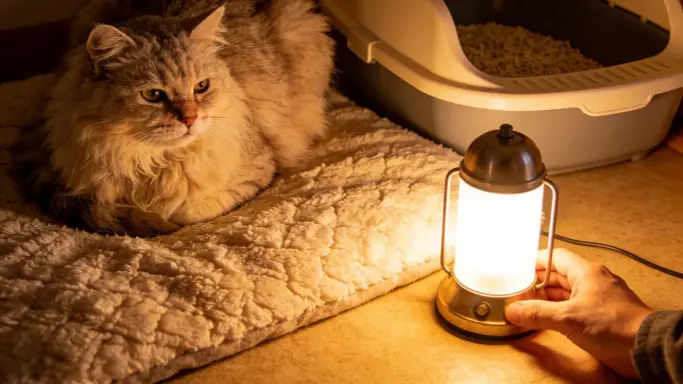
When caring for senior cats, it is necessary to pay attention to improving the living environment: lower the height of the litter box side walls, set up ramps for easy climbing, add night lights, replace with soft bedding, and at the same time maintain a regular schedule and gentle interaction to relieve their discomfort and avoid emotional depression.
Technology Assistance: Practical Tools for Monitoring Cat Emotions
With the development of pet care technology, more and more tools can help owners monitor cats’ emotions and detect abnormalities in a timely manner:
- Smart Collars: Not only can they track the cat’s location, but also monitor activity levels, sleep patterns, and heart rate variability, promptly reminding owners of abnormal cat behaviors and detecting depressive signs in advance.
- Interactive Cameras: Owners can remotely check the cat’s status, feed snacks, and interact and play. Some cameras can also analyze the cat’s behavior patterns through AI to remind owners to pay attention to the cat’s emotions.
- Cat-Specific Music and White Noise Machines: Music specially created for cats can imitate cats’ purring to relieve stress; white noise machines can mask sudden noises, suitable for timid and easily nervous cats, helping them stay calm.
Frequently Asked Questions (FAQs)
Q: What is the difference between cat depression and laziness?
The core lies in behavioral changes. Lazy cats love to sleep, but their appetite and grooming habits are normal; depressed cats will have multiple symptoms such as decreased appetite, loss of interest, and social withdrawal, mostly with clear triggers.
Q: Are indoor cats more prone to depression than outdoor cats?
Both can suffer from depression, but with different triggers. Indoor cats are prone to depression due to boredom, while outdoor cats are prone to depression due to stress. It is sufficient to enrich their lives and relieve stress in a targeted manner.
Q: Can cats take human antidepressant drugs?
No! Human drugs are toxic to cats. Consult a veterinarian and use cat-specific drugs or supplements.
Q: How long does cat depression last?
Most cases can be relieved in 2-4 weeks (with home intervention); if it is due to the loss of a companion, it may last for several months. Seek medical attention if symptoms last more than 1 month.
Q: Can getting another cat relieve a cat’s depression?
It depends on the cat’s personality. It needs to be judged based on the cat’s age, cohabitation experience, and the cause of depression. It is recommended to try fostering first.