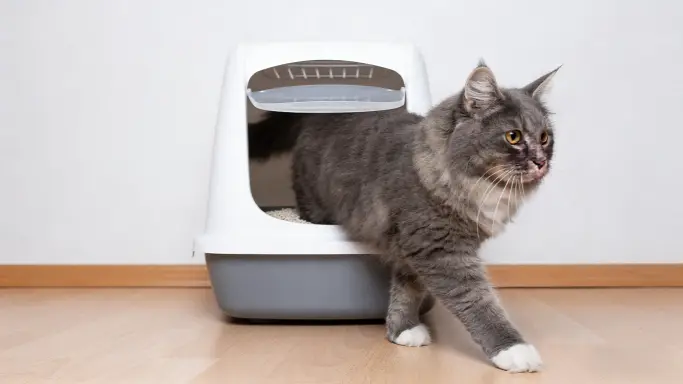

Many cat owners encounter the trouble of their cats urinating outside the litter box, and it’s easy to feel frustrated or even blame the cat for being “disobedient.” In fact, cats never intentionally destroy the environment; this behavior is essentially their way of communicating their needs—whether it’s physical discomfort, environmental incompatibility, or excessive psychological stress. The core of solving this problem is not punishing the cat, but understanding their signals, and using scientific methods to guide cats to redevelop correct toileting habits from the aspects of health, environment, and psychology. As long as you find the right direction and persist with patience, most cats can return to normal, keeping your home clean and tidy
Prioritize Health Checks to Avoid Delaying Treatment
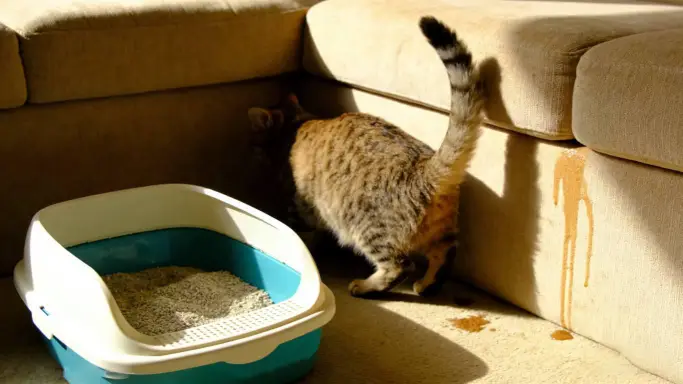
When a cat suddenly starts urinating outside the litter box, the top priority is to take it to the vet to rule out health issues—this is the foundation of all solutions and cannot be ignored. Cats have fragile urinary systems, and many diseases can be life-threatening if not treated in time.
Common health issues that may cause inappropriate urination and their typical symptoms: Urinary tract infections (UTIs) cause cats to urinate frequently with small amounts of urine, and even make painful cries while urinating; bladder stones may lead to difficulty urinating and blood in the urine; arthritis makes it painful for cats to enter and exit the litter box, leading them to refuse to use it; diabetes significantly increases a cat’s water intake and urination volume.
Vets usually conduct physical examinations and urine analysis, and if necessary, combine with blood tests to rule out potential diseases. If the test results are normal, then turn to behavioral and environmental adjustments; if a disease is diagnosed, the inappropriate urination behavior often improves after timely treatment.
Key Action: Thorough Cleaning to Eliminate Triggers for “Repeat Accidents”
A cat’s sense of smell is 14 times more sensitive than that of humans, and the pheromones in cat urine send a signal to the cat that “this place is suitable for toileting.” If you only simply wipe the soiled area, the residual odor will guide the cat to urinate in the same place again, so thorough cleaning is crucial.
Tools needed for cleaning: A UV light (to quickly find invisible urine stains), enzyme cleaner (which can completely break down proteins and pheromones in urine—ordinary cleaners cannot achieve this effect), and plenty of patience.
Cleaning methods for different surfaces: For fabrics (sofas, carpets, clothes), first blot the urine stain with cold water (hot water will set the stain, making it harder to remove), then soak it in enzyme cleaner, then wash and hang to dry as usual, and repeat cleaning if necessary; for hard surfaces (floors, tiles, furniture), wipe evenly with enzyme cleaner, let it sit for 10 minutes to fully break down the urine stain, then rinse with clean water to avoid residual cleaner irritating the cat’s paws.
Scientific Litter Box Placement to Fit Your Cat’s Toileting Habits
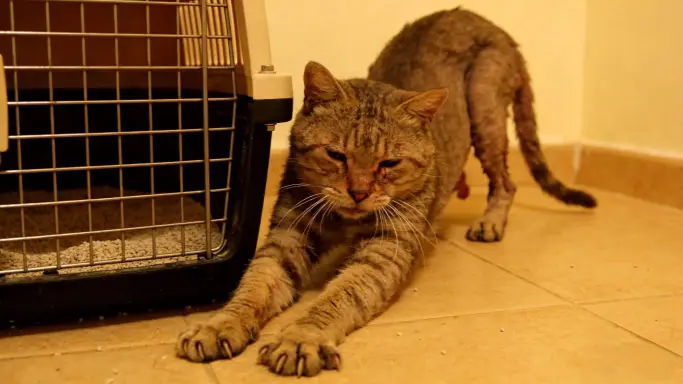
Cats have high requirements for the number, location, style, and type of litter box. Unreasonable placement will make cats actively refuse to use it, which is also a common trigger for inappropriate urination.
Quantity principle: Follow the golden rule of “number of cats + 1”. For example, at least 2 litter boxes for 1 cat, 3 for 2 cats, and so on. Cats are clean and unwilling to share an “unclean” litter box; preparing more can reduce their resistance.
Location selection: The litter box should be placed in a quiet, well-ventilated, and easily accessible area, away from noisy appliances (such as washing machines, heaters), crowded places, as well as the cat’s eating and resting areas. If you live in a multi-story house, it is recommended to place a litter box on each floor for the cat’s convenience.
Style and litter selection: Most cats prefer open-top litter boxes, which have a wide field of view and good air circulation, so they won’t feel “trapped”; covered litter boxes are prone to odor accumulation and have limited space, which many cats reject. Prioritize unscented, fine-grained litter (similar to sand); strongly scented litter can irritate the cat’s sense of smell, leading them to refuse to use it. When changing litter, do it gradually: keep some old litter and mix in new litter little by little to avoid sudden rejection by the cat.
Ideal litter box standards: Large enough for the cat to turn around easily; low sides for easy entry and exit (especially suitable for senior cats and kittens); easy-to-clean material that does not easily retain odors.
Relieve Cat Stress to Reduce Behavioral Urination Issues
Cats are naturally sensitive, and small changes in the external environment can cause them stress, and inappropriate urination is a common manifestation of stress. Many things we take for granted are potential stressors for cats.
Common stressors: New furniture at home, visiting guests, noisy equipment such as vacuum cleaners, changes in daily routines, and the owner’s absence—these can all make cats feel anxious and then urinate inappropriately.
Practical stress relief tips: Use a Feliway diffuser (simulates the cat’s own calming pheromones to help relieve anxiety); maintain a regular routine for the cat, with fixed times for feeding, playing, and cleaning the litter box; provide high perches (such as cat trees) for the cat—cats feel safer at heights; create a quiet resting space to avoid frequent disturbances to the cat.
Handling Special Scenarios: Multi-Cat Households, Seasonal Changes, and Age Differences
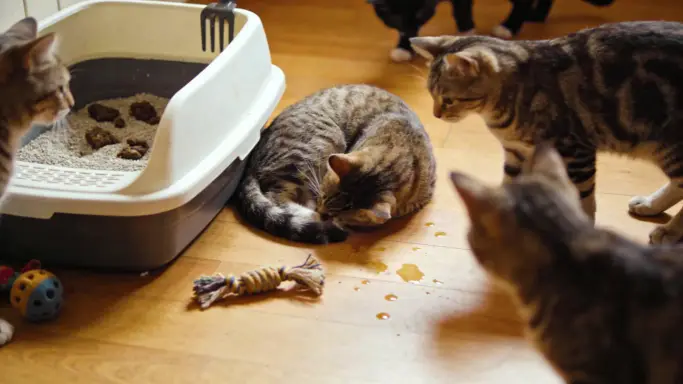
In different scenarios, a cat’s toileting needs will change; targeted adjustments can effectively avoid inappropriate urination.
Multi-cat households: “Litter box bullying” is likely to occur, where one cat monopolizes the litter box and prevents other cats from using it. Solutions: Place litter boxes in different locations to avoid centralized placement; provide sufficient vertical space (such as cat trees) for cats to avoid each other; set up separate feeding stations to reduce competition between cats.
Seasonal changes: Changes in air pressure and extreme weather can affect a cat’s mood and behavior. In winter, senior cats with arthritis may refuse to go to a distant litter box due to cold and pain—you can place a heated bed near the litter box; in summer, open-top litter boxes are prone to overheating—choose light-colored litter boxes and avoid direct sunlight; during stormy weather, cats are prone to anxiety—add an extra litter box in a quiet area to give them more choices.
Age differences: Kittens have not yet fully developed motor coordination and may easily lose their way to the litter box—use low-sided litter boxes placed near their napping and playing areas, and give positive rewards when they use it correctly; senior cats are prone to arthritis and cognitive decline, leading to difficulty entering and exiting the litter box, frequent urination, and forgetting the location of the litter box—you can install a ramped entrance to the litter box, put a night light nearby, and increase the cleaning frequency.
Human Intervention: Avoid Mistakes and Use Positive Reinforcement
In many cases, the owner’s improper reaction will exacerbate the cat’s inappropriate urination, while correct guidance can speed up the problem-solving process.
Common mistakes: Shouting at or punishing the cat after it urinates inappropriately. Cats cannot associate the owner’s anger with the “inappropriate urination” behavior; they will only fear the owner or the litter box, leading to greater resistance to using it and worsening the problem.
Correct approach: Use positive reinforcement—timely praise and reward the cat with treats when it uses the litter box correctly to strengthen this positive behavior. At the same time, reflect on your own behavior: avoid sudden changes in routine, making noise near the litter box, or completely removing the cat’s scent marks with strong cleaners (a cat’s scent marks give it a sense of security; over-cleaning will make it feel anxious).
Observation and Recording: Predict Problems in Advance for Targeted Solutions
Before a cat urinates inappropriately, it often sends some subtle warning signals. Learning to observe and record can help you find problems in advance, intervene in time, and avoid the situation from worsening.
Warning signals to pay attention to: The cat repeatedly sniffs and lingers around the litter box before entering; excessive scratching on both sides of its body; in multi-cat households, the cat only uses one litter box and avoids others.
Recording tips: Record the cat’s toileting situation for a week in a row, including frequency of use, preferred litter box location, and whether there are avoidance behaviors. Through recording, you can find potential patterns—for example, whether the cat urinates inappropriately at specific times or in specific scenarios—and then accurately identify the trigger and solve it targetedly.
Common FAQs (Simplified Version)
- Q: How to judge whether a cat’s inappropriate urination is a health problem or a behavioral problem? A: If there are symptoms such as difficulty urinating, painful urination, blood in urine, or frequent urination with small amounts, it is likely a health problem—seek medical attention immediately; if there are no obvious symptoms and the inappropriate urination is related to the environment/stress, it is mostly a behavioral problem.
- Q: What is the key to removing cat urine? A: Use enzyme cleaner to completely break down urine stains, and use a UV light to find invisible stains to avoid residual odors guiding the cat to urinate again.
- Q: How many litter boxes does 1 cat need? A: At least 2, following the “number of cats + 1” principle, placed in different locations to improve the cat’s acceptance.
- Q: Why do cats hate covered litter boxes? A: Odors are easy to accumulate and the field of view is limited, making cats feel depressed and unsafe—prioritize open-top models.
- Q: Can stress really cause cats to urinate inappropriately? A: Yes, cats are sensitive; environmental changes, noise, etc., can all trigger stress-induced inappropriate urination, which can be relieved with a Feliway diffuser.